Termites: The "Silent Destroyers"
Termites are small, wood-eating insects that live in massive underground or mound-based colonies. They are notorious for eating homes from the inside out, often remaining undetected until significant damage is done.
Damage to Your Home
Structural Ruin: They consume supporting beams, floor joists, and wall studs, compromising the safety of the building.
Cosmetic Issues: They cause sagging ceilings, buckling floors, and "bubbling" paint that looks like water damage.
Hidden Destruction: Because they avoid light, they leave a thin exterior veneer of wood or paint, making timbers look solid even when they are hollow.
Prevention & Treatment
Prevention: Remove wood-to-soil contact (like woodpiles against walls), fix leaking pipes to reduce moisture, and ensure sub-floor ventilation is clear.
Chemical Barriers: Professionals apply liquid termiticides to the soil around your foundations to kill or repel termites.
Baiting: Stations are placed around the property to lure termites; they carry slow-acting poison back to the nest, eventually destroying the entire colony.
Inspections: Annual professional inspections are the most effective way to catch an infestation before it becomes a catastrophe.
Ecological Roles of Termites in Australia
Termites (Order Blattodea) are often called "ecosystem engineers" in Australia, playing a vital role in maintaining the health of the continent's diverse landscapes:
Nutrient Cycling: Termites are the primary decomposers of cellulose in arid and semi-arid regions. They break down dead wood, grass, and leaf litter, returning essential nutrients to the soil.
Soil Engineering: Their tunneling and mound-building activities aerate the soil, increase water infiltration, and bring nutrient-rich minerals from deep underground to the surface.
Habitat Creation: Termite mounds provide critical shelter and nesting sites for other Australian wildlife, including lizards, snakes, and birds like the Hooded Parrot.
Food Source: They serve as a foundational food source for many native species, most notably the Numbat, which can consume up to 20,000 termites a day.
Termite Biology and Lifecycle
Body Segmentation
Termites are often mistaken for "white ants," but they are actually closely related to cockroaches. Their body structure reflects this:
Head: Features powerful mandibles and antennae. Unlike ants, their antennae are straight and "bead-like" (moniliform).
Thorax: Connected to the abdomen by a broad waist. This lacks the thin, pinched "petiole" found in ants.
Abdomen: A soft, thick-waisted segment containing the complex digestive system required to break down cellulose.
The Lifecycle
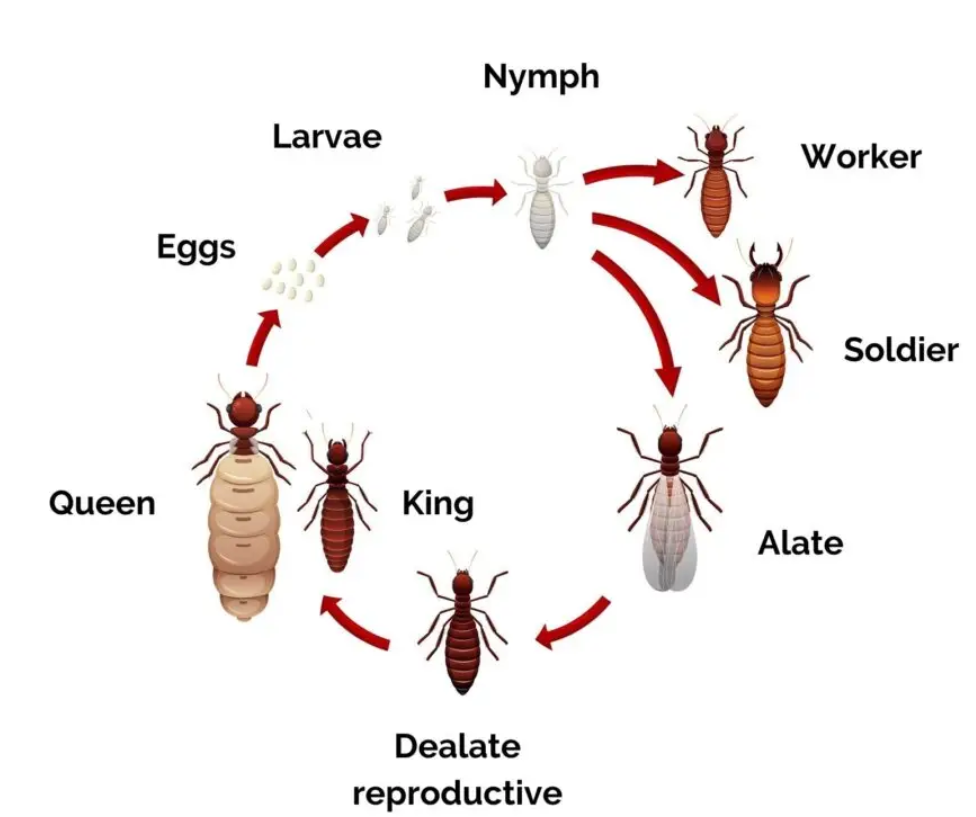
Termites undergo incomplete metamorphosis (hemimetabolous), meaning they do not have a pupal stage:
Egg: Tiny, pale eggs laid by the Queen in the heart of the colony.
Nymph: Young termites that resemble small adults. They can develop into various castes depending on the colony's needs.
Adult (Castes):
Workers: Blind, wingless, and sterile. They do all the foraging and mound maintenance.
Soldiers: Feature large, darkened heads and mandibles to defend the colony.
Reproductives (Alates): Winged termites that swarm during humid weather to start new colonies.
King and Queen: The original founders who live deep within the central nursery.
Nesting Habits
Australian termites exhibit specialized nesting strategies to survive extreme temperatures:
Epigeal Mounds: Massive structures built above ground from a mix of soil, saliva, and excrement (carton). The famous "Magnetic Termite" mounds in the NT are oriented North-South to regulate heat.
Subterranean: Tunnels located entirely underground or inside the root systems of trees, allowing them to travel long distances to find food while remaining hydrated.
Arboreal: Nests built high in trees, often appearing as large, dark "bulbs" on trunks or branches, connected to the ground via mud shelter tubes.
Drywood: Small colonies that live entirely inside a single piece of timber, requiring no contact with the soil for moisture.