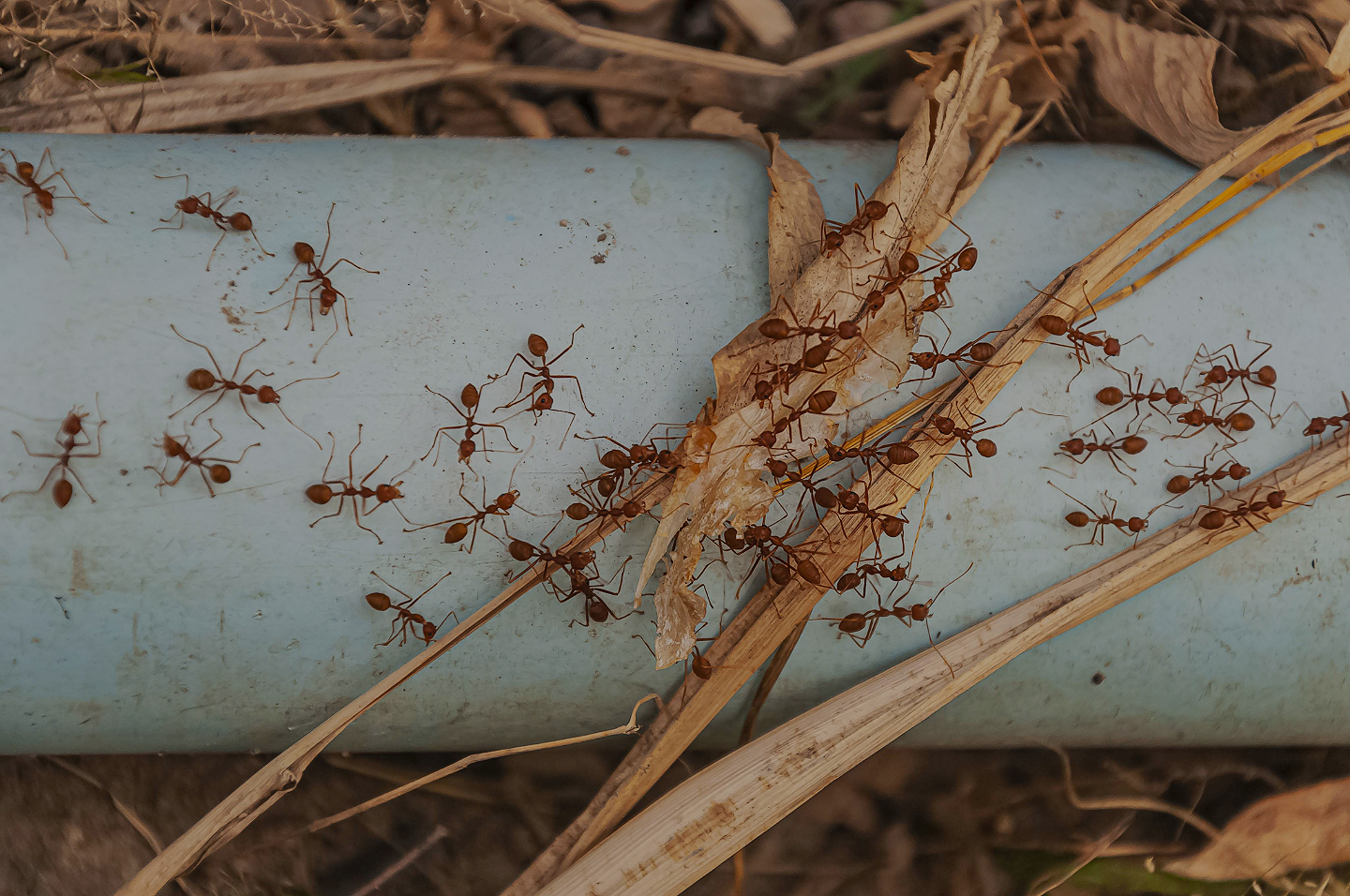
Ants are social insects with a segmented
body (head, thorax, and abdomen) that live
in colonies structured by a caste system.
Damage
Structural: Carpenter ants excavate galleries in damp or decaying wood to nest, which can weaken building foundations over time.
Contamination: Species like Pharaoh's ants forage in unsanitary areas and can mechanically transfer pathogens to food surfaces.
Prevention & Treatment
Sanitation: Seal food in containers and clean spills to remove attractants like sugar and proteins.
Exclusion: Fix plumbing leaks and seal cracks in walls to block entry.
Control: Use slow-acting baits that workers carry back to the nest to eliminate the queen and the entire colony.
Ecological Roles of Ants
Ants are influential in terrestrial ecosystems, maintaining balance and biodiversity through several key functions:
Pollination: Ants transfer pollen while foraging for nectar, typically for plants with flowers close to the ground.
Decomposition: They break down organic matter like dead insects and leaves, which enriches the soil through nutrient cycling.
Predation: Many species act as predators, feeding on pests like termites or cicadas, which helps regulate other insect populations.
Soil Properties: Underground nesting activities aerate the soil and influence water infiltration and nutrient distribution.
Ant Biology and Lifecycle
Body Segmentation
Ants (Family Formicidae) have a distinct three-segment body structure:
Head: Houses compound eyes, sensitive antennae for touch/smell, and mandibles used for carrying food and defense.
Thorax (Mesosoma): The middle segment where the six legs and wings (if present) are attached.
Abdomen (Gaster): The final segment, often connected to the thorax by a small joint called a petiole.
The Lifecycle
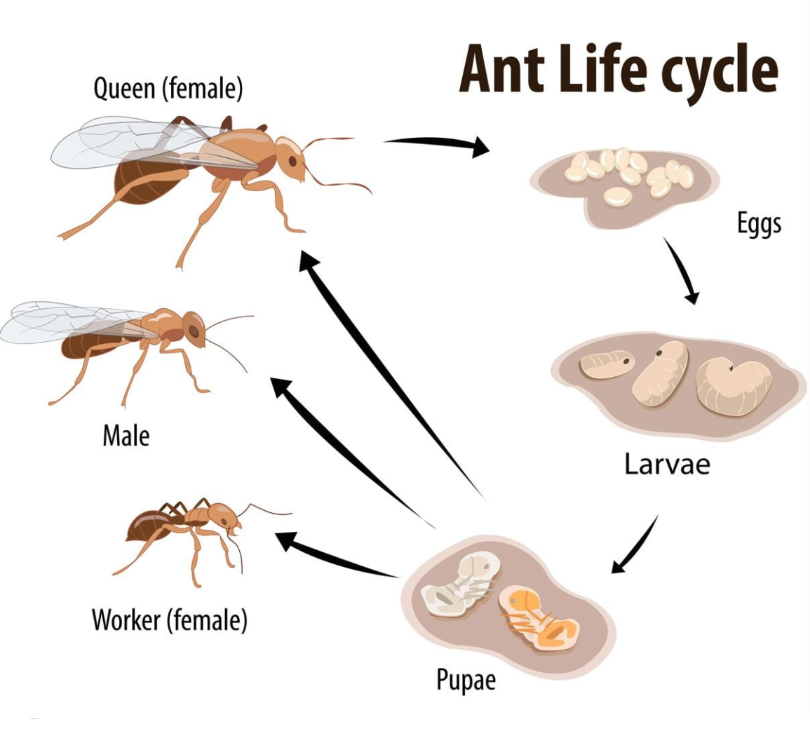
Ants undergo a complete metamorphosis with four distinct stages:
Egg: Small, oval, and white; laid by the queen.
Larva: Legless, worm-like, and entirely dependent on workers for food.
Pupa: A transformation stage where the ant develops adult features; some species spin a silk-like cocoon.
Adult: Emerges as one of several castes—Workers (sterile females), Queens (reproductive females), or Males (short-lived reproductive individuals).
Nesting Habits
Ants exhibit diverse nesting behaviors to adapt to their environments:
Underground: Tunnels and chambers that can extend several meters deep and span hundreds of square meters.
Mounds: Built from soil and sand to regulate temperature, common in species like Fire ants or Funnel ants.
Wood: Carpenter ants excavate galleries in damp or rotting wood (though they do not eat the wood).
Leaf Nests: Weaver ants use larval silk to bind leaves together in trees.