
Cockroach Ecology and
Biology
Australia is home to a diverse population of both endemic and introduced cockroach species. While native varieties often fulfill essential ecological roles, introduced types—such as the German and American cockroaches—frequently become urban nuisances due to their high level of adaptation to human structures.
Key Ecological Roles
In their natural habitats, cockroaches serve as critical detritivores. Their primary functions include:
Decomposition: They break down organic materials like fallen leaves and decaying wood, which is vital for nutrient cycling and soil enrichment.
Food Web Support: They act as a food source for local wildlife, including various lizards, frogs, and birds.
Physical Characteristics and Adaptations
Cockroaches possess several specialized traits that allow them to thrive in diverse environments:
Streamlined Build: Their flat bodies enable them to navigate through tiny gaps and narrow crevices, providing excellent protection from predators.
Sensory Navigation: Long, thread-like antennae allow them to detect subtle air movements and chemical signals to find food or avoid danger.
Advanced Vision: Large compound eyes made of approximately 2,000 individual units (ommatidia) are highly sensitive to movement, even in low light.
Speed: Their six jointed legs are designed for rapid running, making them some of the fastest insects relative to their size.
Lifecycle and Reproduction
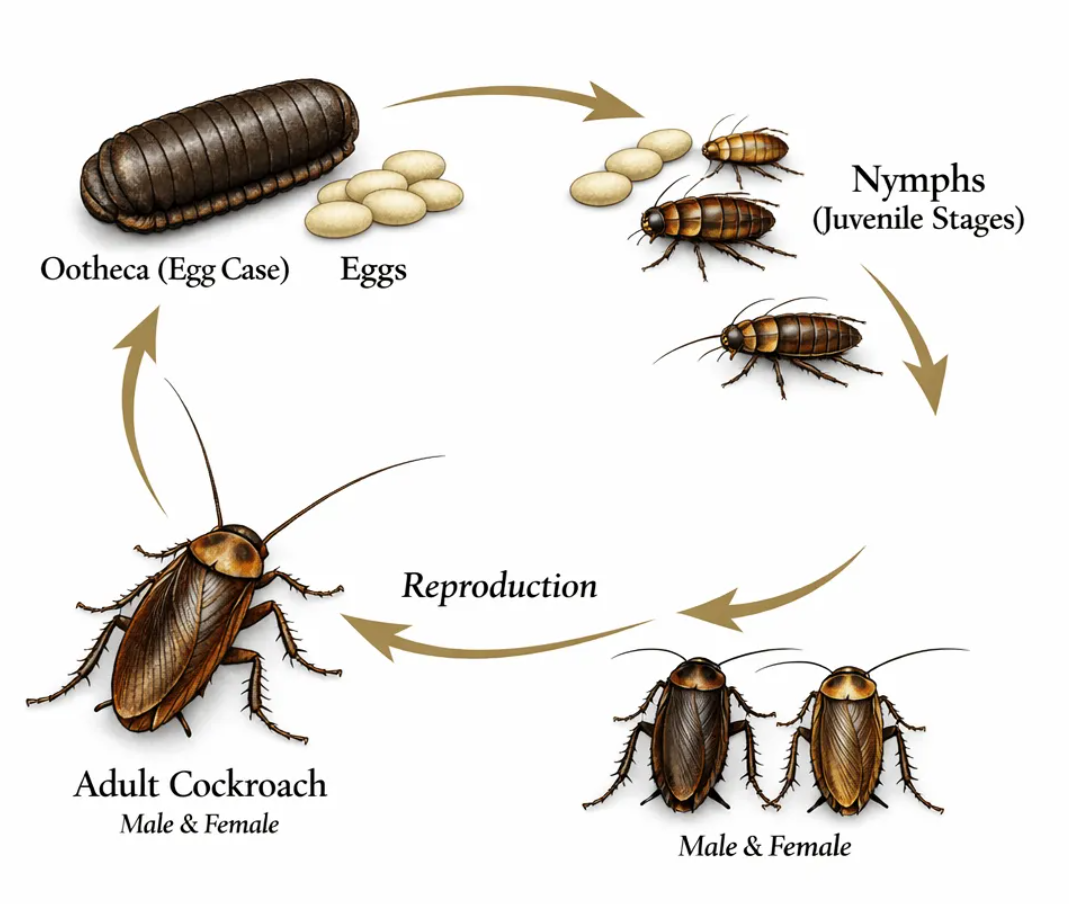
Cockroaches undergo incomplete metamorphosis, progressing through three distinct stages:
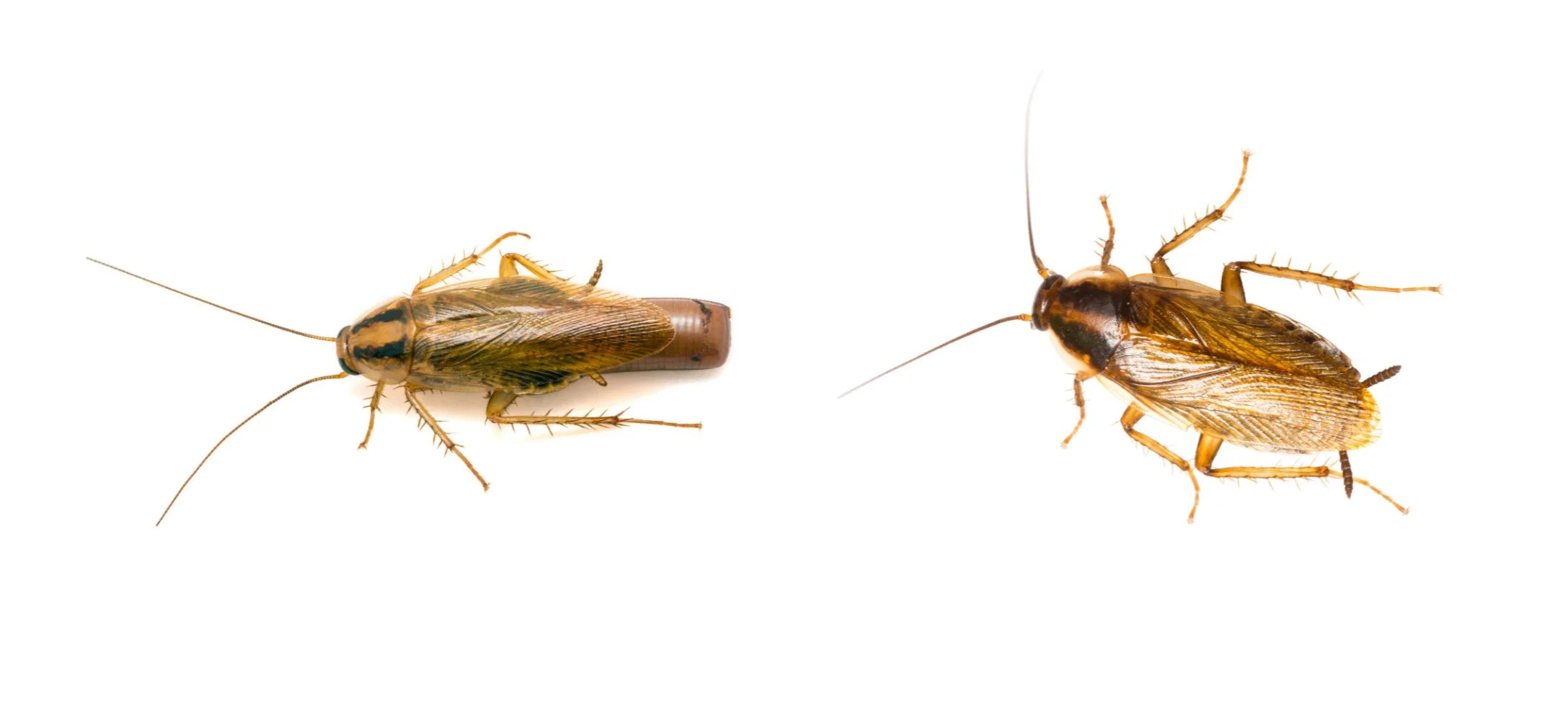
Egg: Females produce a protective casing called an ootheca, which holds multiple eggs. Depending on the species, this case may be carried by the female or hidden in a secure spot.
Nymph: Young cockroaches look like smaller, wingless adults. They undergo 6 to 14 molts, shedding their exoskeleton as they grow.
Adult: Once they reach the final stage, they become sexually mature. Interestingly, some species like the American cockroach can reproduce asexually through a process called parthenogenesis if no males are present.
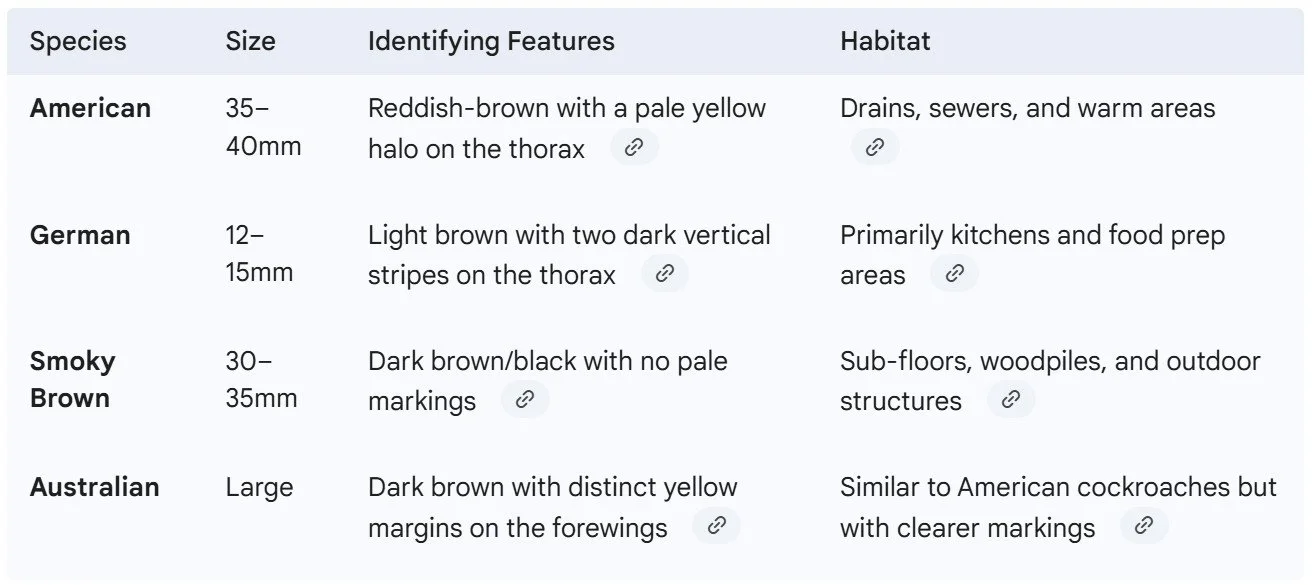
Common Urban Species Comparison
Behavioral Habits
Nocturnal Nature: They are most active at night to avoid detection and predators.
Thigmotactic Behavior: They prefer resting in spots where they have physical contact on all sides, such as tight cracks.
Omnivorous Diet: They scavenge for almost anything, including food scraps, paper, fabric, and even glue.
Social Aggregation: They use pheromones to signal "safe" hiding spots to others, leading to groups clustering together.
Professional Management Strategies
Effective control requires a multi-faceted approach:
Sanitation: Eliminating access to water and food by sealing containers and fixing leaks.
Exclusion: Filling cracks and crevices to remove potential hiding spots.
Targeted Treatment: Using a combination of sticky traps for monitoring, along with baits, gels, or dusts in specific harborages rather than broad spraying.
Key Ecological Roles
In their natural habitats, cockroaches serve as critical detritivores. Their primary functions include:
Decomposition: They break down organic materials like fallen leaves and decaying wood, which is vital for nutrient cycling and soil enrichment.
Food Web Support: They act as a food source for local wildlife, including various lizards, frogs, and birds.
Physical Characteristics and
Adaptations
Cockroaches possess several specialized traits that allow them to thrive in diverse environments:
Streamlined Build: Their flat bodies enable them to navigate through tiny gaps and narrow crevices, providing excellent protection from predators.
Sensory Navigation: Long, thread-like antennae allow them to detect subtle air movements and chemical signals to find food or avoid danger.
Advanced Vision: Large compound eyes made of approximately 2,000 individual units (ommatidia) are highly sensitive to movement, even in low light.
Speed: Their six jointed legs are designed for rapid running, making them some of the fastest insects relative to their size.
Lifecycle and Reproduction
Cockroaches undergo incomplete metamorphosis, progressing through three distinct stages:
Egg: Females produce a protective casing called an ootheca, which holds multiple eggs. Depending on the species, this case may be carried by the female or hidden in a secure spot.
Nymph: Young cockroaches look like smaller, wingless adults. They undergo 6 to 14 molts, shedding their exoskeleton as they grow.
Adult: Once they reach the final stage, they become sexually mature. Interestingly, some species like the American cockroach can reproduce asexually through a process called parthenogenesis if no males are present.
Common Urban Species Comparison
Behavioral Habits
Nocturnal Nature: They are most active at night to avoid detection and predators.
Thigmotactic Behavior: They prefer resting in spots where they have physical contact on all sides, such as tight cracks.
Omnivorous Diet: They scavenge for almost anything, including food scraps, paper, fabric, and even glue.
Social Aggregation: They use pheromones to signal "safe" hiding spots to others, leading to groups clustering together.
Professional Management Strategies
Effective control requires a multi-faceted approach:
Sanitation: Eliminating access to water and food by sealing containers and fixing leaks.
Exclusion: Filling cracks and crevices to remove potential hiding spots.
Targeted Treatment: Using a combination of sticky traps for monitoring, along with baits, gels, or dusts in specific harborages rather than broad spraying.