Flies in Australia
The Damage
Disease: Flies carry bacteria like E. coli and Salmonella from waste to your food.
Contamination: They liquefy solids with saliva, spreading pathogens on surfaces.
Speed: Some species breed so fast they can overrun a home in just one week.
The Culprits
Houseflies: Breed in garbage and waste; major health risks.
Drain Flies: Live in the organic sludge inside kitchen and bathroom pipes.
Fruit Flies: Target fermenting sugars in fruit or drink spills.
Control & Prevention
Clean: Remove moist waste and food spills to kill breeding grounds.
Block: Use screens and seal gaps to keep them out.
Treat: Clean drains and use targeted solutions to break the lifecycle.
1. The Common Housefly (Musca domestica)
Identification: These are medium-sized flies (6–7mm) with a dark grey appearance.
The Danger: They are notorious "filth-associated" pests that bridge the gap between waste and your living space. They are known carriers of pathogens like E. coli and Salmonella.
Habits: Equipped with "sponging" mouthparts, they liquefy solid food using saliva before consuming it.
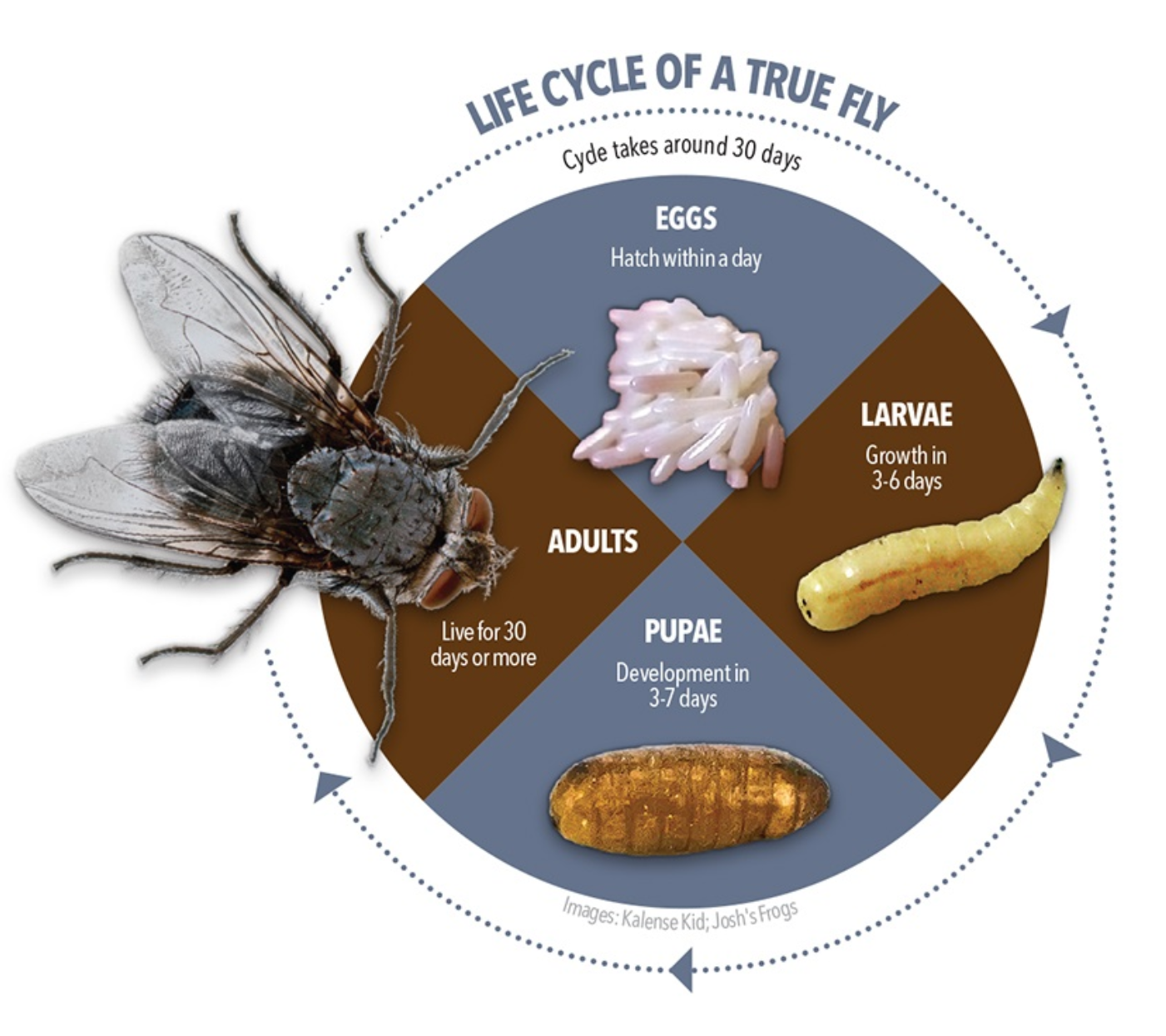
Breeding: A single female can lay up to 150 eggs in a batch, typically in moist, decaying organic matter like garbage or pet waste.
Lifecycle: In warm climates like Queensland, they can go from egg to adult in as little as 2 to 4 weeks.
2. Drain Flies (Psychodidae)
Identification: Often called "moth flies" due to their fuzzy, hairy bodies and leaf-shaped wings. They are small (2–4mm) and usually dark grey.
Where They Hide: They thrive in high-humidity areas like bathrooms and kitchens, specifically inside drains, sewers, and septic tanks.
Breeding: They lay eggs in the gelatinous "sludge" or organic film that builds up inside pipes.
Signs of Infestation: Seeing small, moth-like insects hovering near sinks or showers usually indicates an organic blockage in your plumbing.
3. Vinegar/Fruit Flies (Drosophila melanogaster)
Identification: Tiny (2.5–4mm) with distinct bright red eyes and a brownish-yellow body.
Feeding Habits: They have a powerful sense of smell and are drawn to fermenting sugars found in overripe fruit, vegetables, and even beer or wine spills.
Rapid Growth: Under optimal conditions, their entire lifecycle from egg to adult can be completed in just one week.
Harbourage: Common indoor hiding spots include fruit bowls, pantries, and poorly managed compost bins.
Why Ecology Matters for Your Property
While these insects are vital decomposers in the natural world, they become a health risk when they enter your home or business. Effective control at Pest Vantage involves:
Sanitation: Removing the moist organic waste they need for breeding.
Exclusion: Sealing entry points to prevent them from moving between "microbe-rich" environments and your food.
Lifecycle Targeting: Our treatments are most effective when we target specific stages of their rapid development.