Bees and Wasps: At
a Glance
Bees and wasps belong to the order Hymenoptera and serve vital ecological roles: bees are paramount pollinators, while wasps act as natural predators that control garden pests.
Risks and Prevention
Health Hazards: Both insects protect themselves using a painful sting. Wasps can sting multiple times, whereas honeybees sting only once. For allergic individuals, a sting can cause a life-threatening reaction (anaphylaxis).
Home Impact: They don’t cause direct structural damage, but building nests inside wall cavities, roof voids, and under eaves can lead to secondary issues like blocked vents or melting honey.
Prevention: Block access to your home by sealing cracks around doors, windows, and eaves. Keep bins tightly shut and clear away sugary or protein-rich food scraps that attract them.
Treatment: Never swat at a nest. Because bees are ecologically vital, call a professional to relocate bee hives safely. For aggressive wasp nests, a professional pest controller should eliminate and remove the colony.
Bees & Wasps
In the Brisbane ecosystem, bees and wasps play vital but distinct roles. While both are essential for biodiversity, managing them in urban environments requires a deep understanding of their biology and nesting habits.
Bees: Nature’s Essential Pollinators
Bees are the primary pollinators for many local wildflowers and agricultural crops.
Biology: They are characterized by hairy, electrostatically charged bodies designed to attract and hold pollen. They use specialized "pollen baskets" on their hind legs to transport these resources back to the hive.
Diet: Bees are herbivorous, relying on nectar for carbohydrates and pollen for essential proteins and minerals.
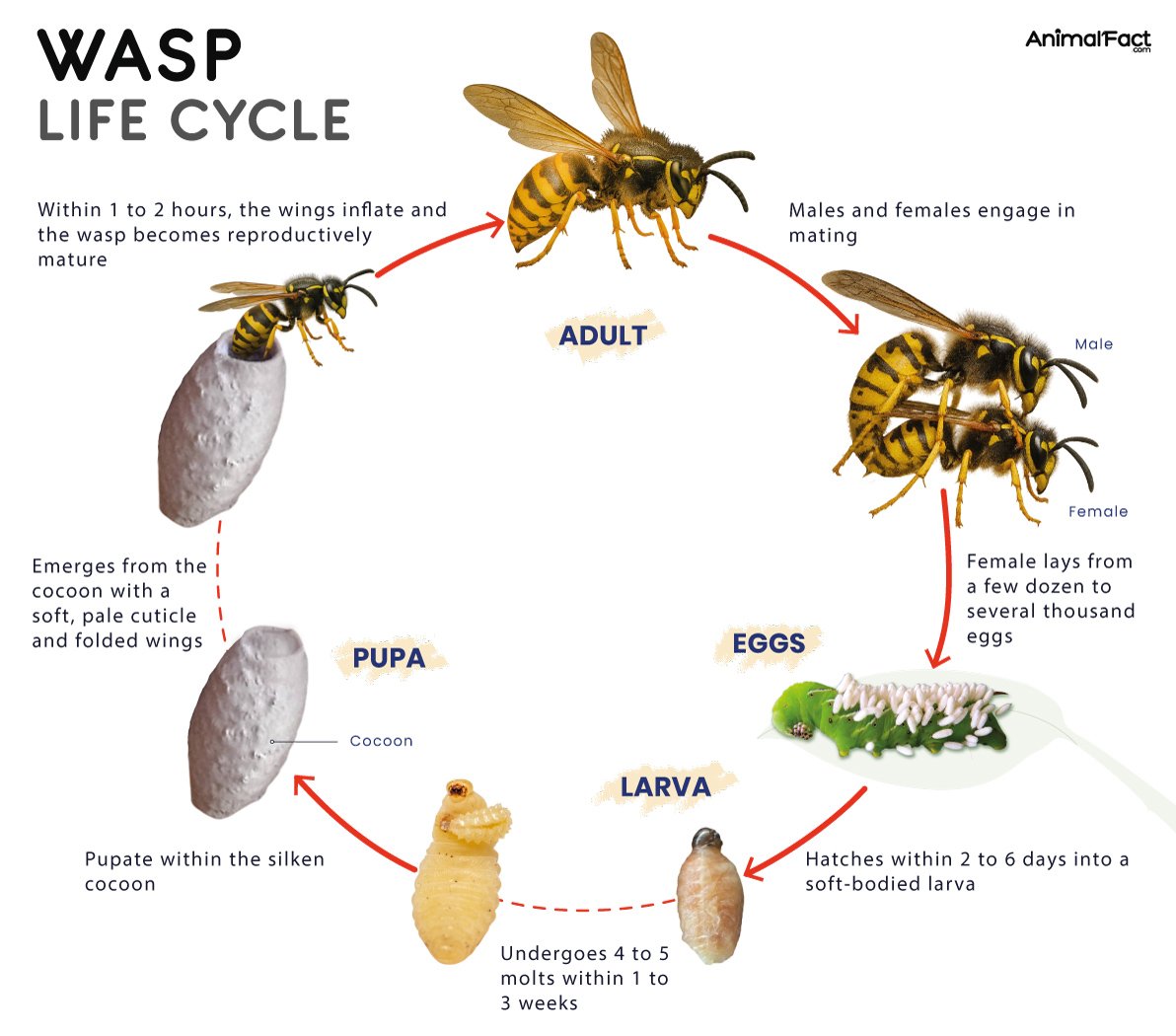
Life Cycle: They undergo a four-stage development process: egg, larva, pupa, and adult.
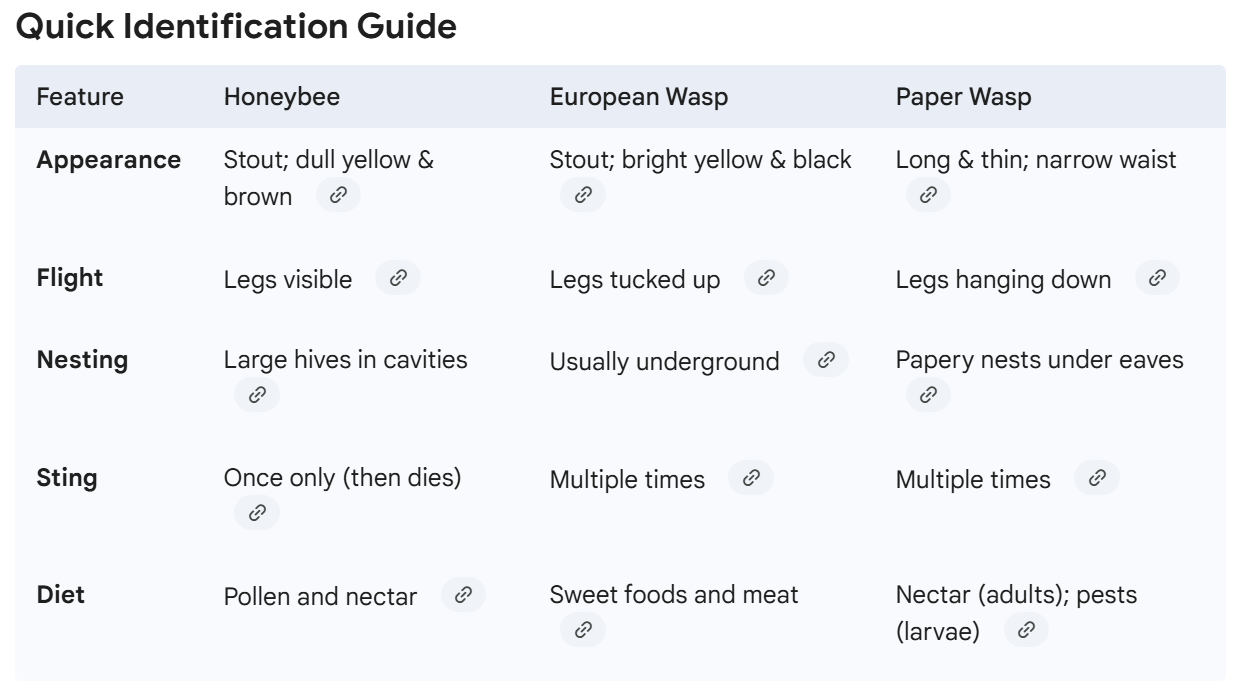
Nesting: Honeybees typically seek out protected cavities, such as hollow trees or wall voids, where they build intricate hexagonal beeswax combs.
Australian Native Bees
Our region is home to over 2,000 species of native bees:
Solitary Species: Most native bees are solitary, with a single female building an individual nest for her eggs.
Social Species: Australia has 11 species of social stingless bees (such as Tetragonula carbonaria), which are small, black, and typically nest in hollow logs.
Wasps: Versatile Predators
Wasps provide natural pest control by hunting various insects, though they can be more aggressive than bees.
Biology: Wasps generally have smoother, less hairy bodies and a distinctive "narrow waist" (petiole).
Ecological Role: Predatory wasps hunt pests to feed their larvae, while parasitic wasps lay eggs within other insects to regulate their populations.
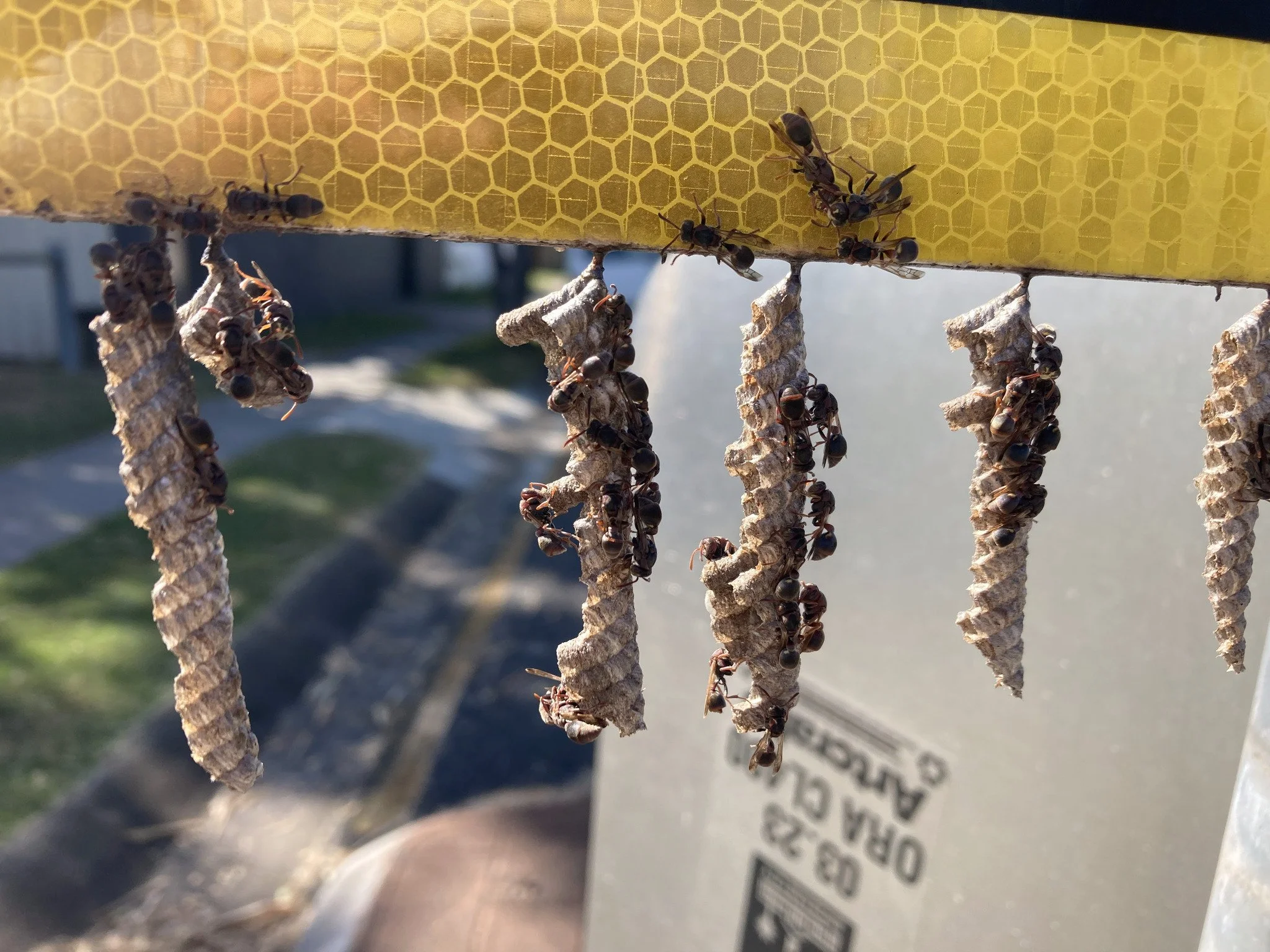
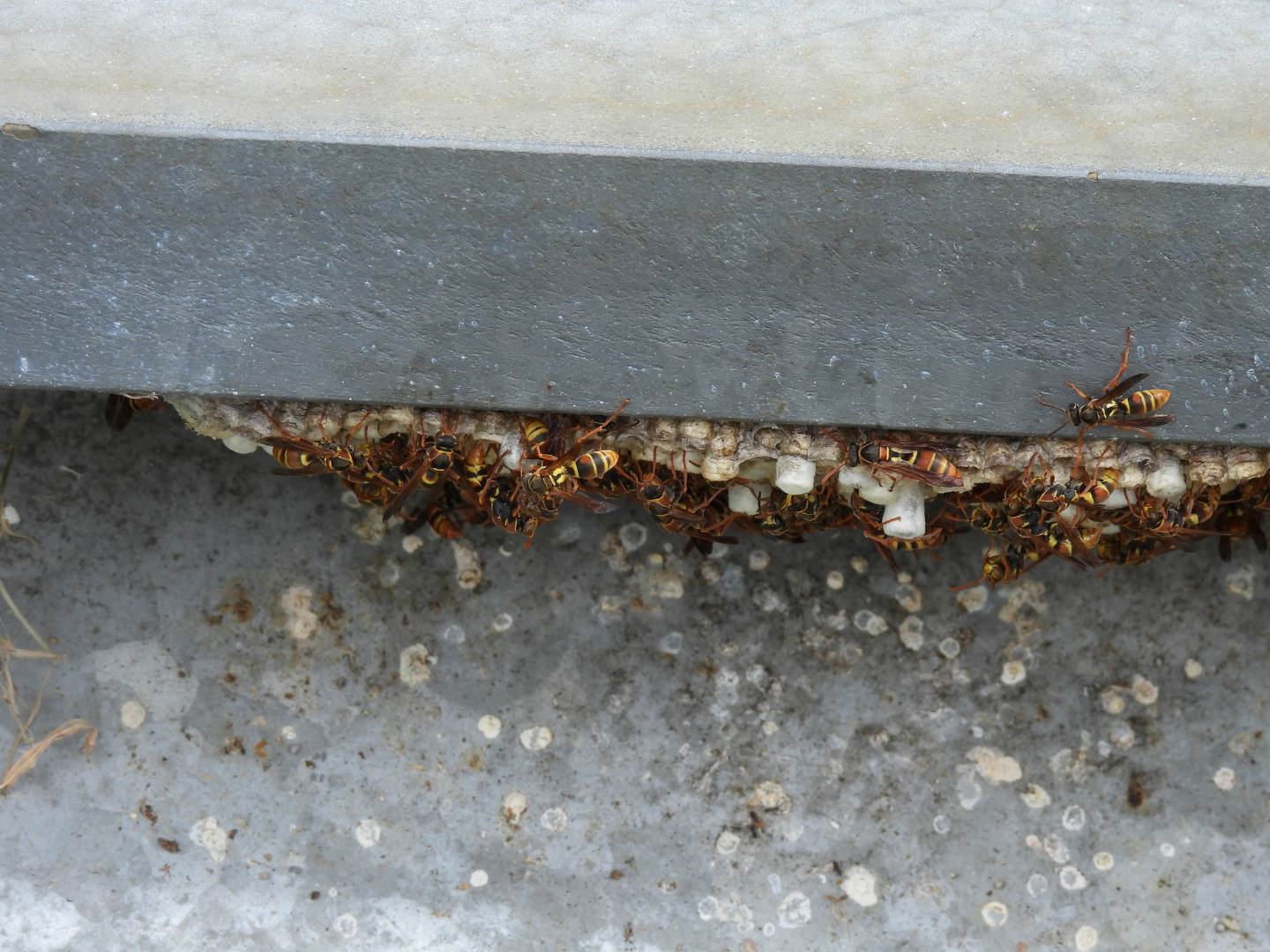
Nesting: Many social wasps, like paper wasps, create nests from a papery pulp made of chewed wood fibers and saliva. These are often found hanging from eaves, pergolas, or fence caps.
Behavior: Unlike honeybees, wasps can often sting multiple times without dying.
Professional Management
Strategy
Understanding the specific "harbourage" (nesting) preferences is the first step toward effective management.
Bees prefer secure, enclosed spaces.
Wasps are more varied, utilizing both exposed paper nests and concealed mud or ground burrows.
For your Brisbane property, identifying the flight path of returning insects is the most effective way to locate a hidden nest and determine the appropriate course of action.