

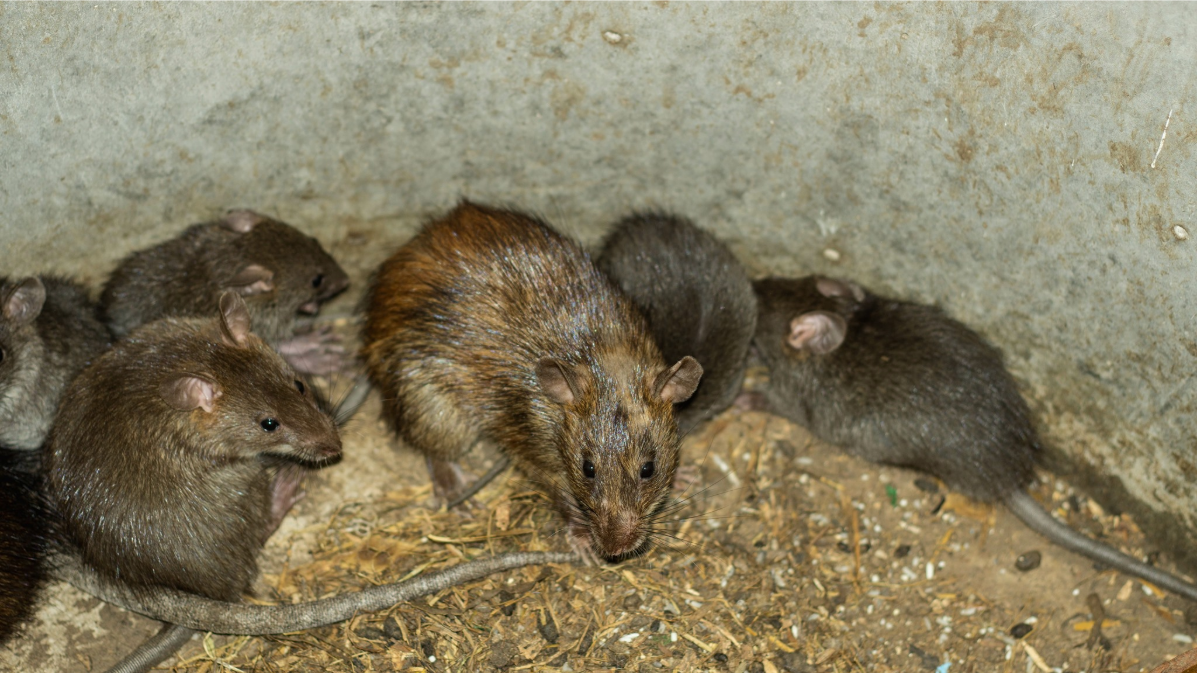
Rodents: Risks and
Prevention
Rodents are highly adaptable mammals that frequently invade homes for shelter and food. Common urban species include the House Mouse, Roof Rat, and Norway Rat.
Damage and Risks
Structural Damage: They gnaw on building materials and can undermine foundations with intricate burrowing.
Contamination: Rodents ruin stored food and crops, making them major pests in domestic environments.
Health Hazards: They are known vectors for diseases and carry bacteria into living spaces.
Treatment and Prevention
Identify the Species: Effective control requires checking droppings and nesting habits—Roof Rats prefer attics, while Norway Rats prefer basements or burrows.
Eliminate Harbourages: Remove woodpiles, rubbish, and clutter where they nest.
Seal Entry Points: Close gaps in walls, roofs, and foundations to block their path inside.
Remove Food Sources: Keep all food in sealed containers and maintain clean kitchen areas to discourage nesting.
Rodent Identification and Biology
Effectively managing rodent populations begins with accurate identification. Rodents differ significantly in their physical traits, nesting habits, and dietary preferences.
1. The House Mouse (Mus musculus)
Appearance: These are small, agile rodents weighing roughly 20g. They feature a slender frame, pointed nose, large ears, and a long, hairless tail.
Droppings: Small and thin (4–7mm) with pointed ends.
Lifecycle: Known for rapid breeding, females can produce 5–10 litters annually, with 3–14 pups per litter after a 19–21 day gestation.
Behavior: Primarily active at night and excellent at climbing, they prefer seeds and grains but will eat various foods.
Nesting: They seek dark, secluded spots near food and water, such as wall voids or under large appliances.
2. The Roof Rat (Rattus Rattus)
Appearance: A medium-sized, sleek rodent (150–250g) with a pointed snout and a scaly tail that is longer than its combined head and body length.
Droppings: Medium-sized (7–14mm) with distinct pointed ends.
Lifecycle: They reach maturity in 3–4 months and typically have 4–6 litters per year.
Behavior: Highly athletic climbers that often travel along power lines and branches. They favor fruits, nuts, and grains.
Nesting: As their name suggests, they prefer elevated areas like attics, rafters, and trees.
3. The Norway Rat (Rattus norvegicus)
Appearance: The largest of the three (300–500g), featuring a heavy, robust body, blunt nose, small ears, and a tail shorter than its body.
Droppings: Large (14–19mm) with blunt, rounded ends.
Lifecycle: Mature quickly (2–3 months) and produce 3–6 litters annually, usually with 7–8 young per litter.
Behavior: Powerful swimmers and natural burrowers. They have a diverse diet including meats, grains, and fruits.
Nesting: They typically live in underground tunnel systems, often found along foundations, under woodpiles, or in damp basements.