
Fleas: At a Glance
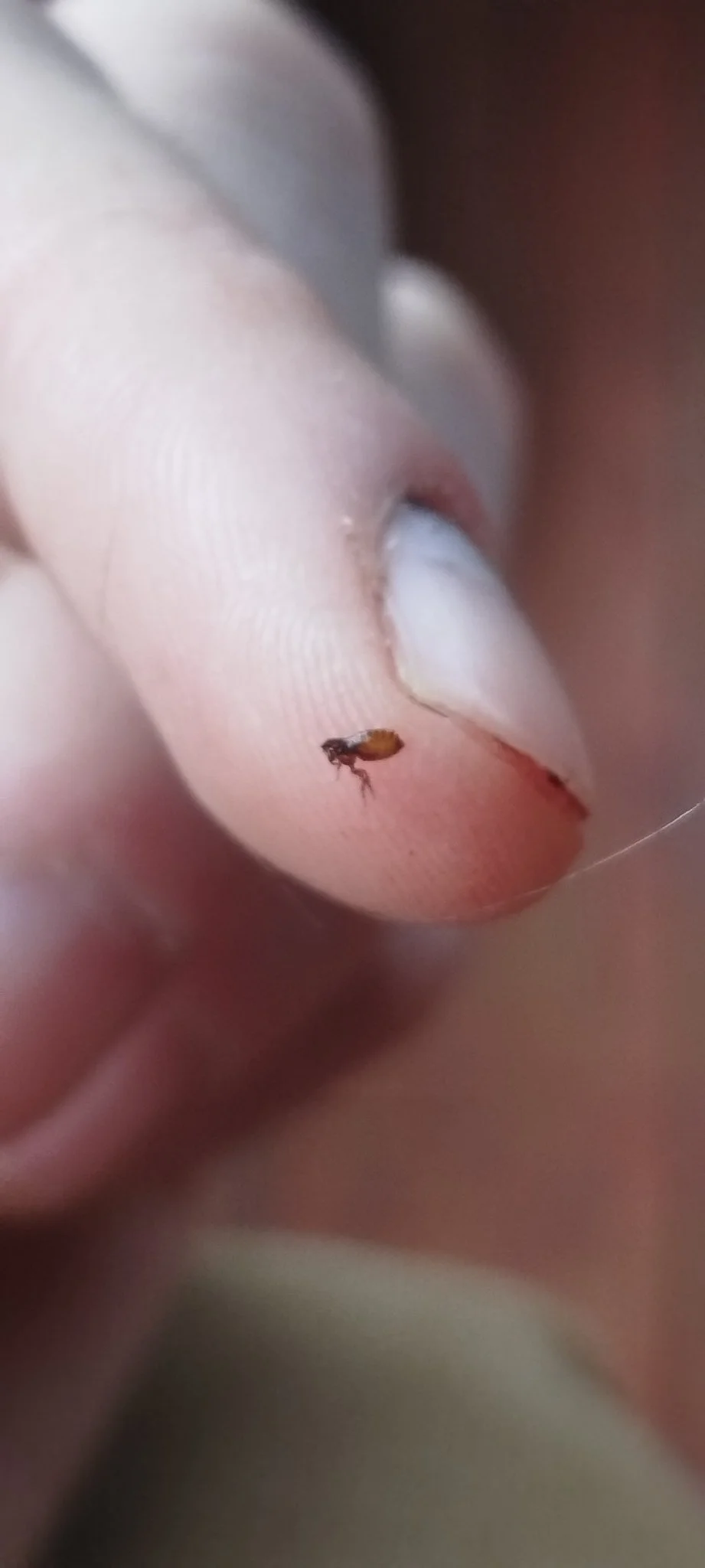
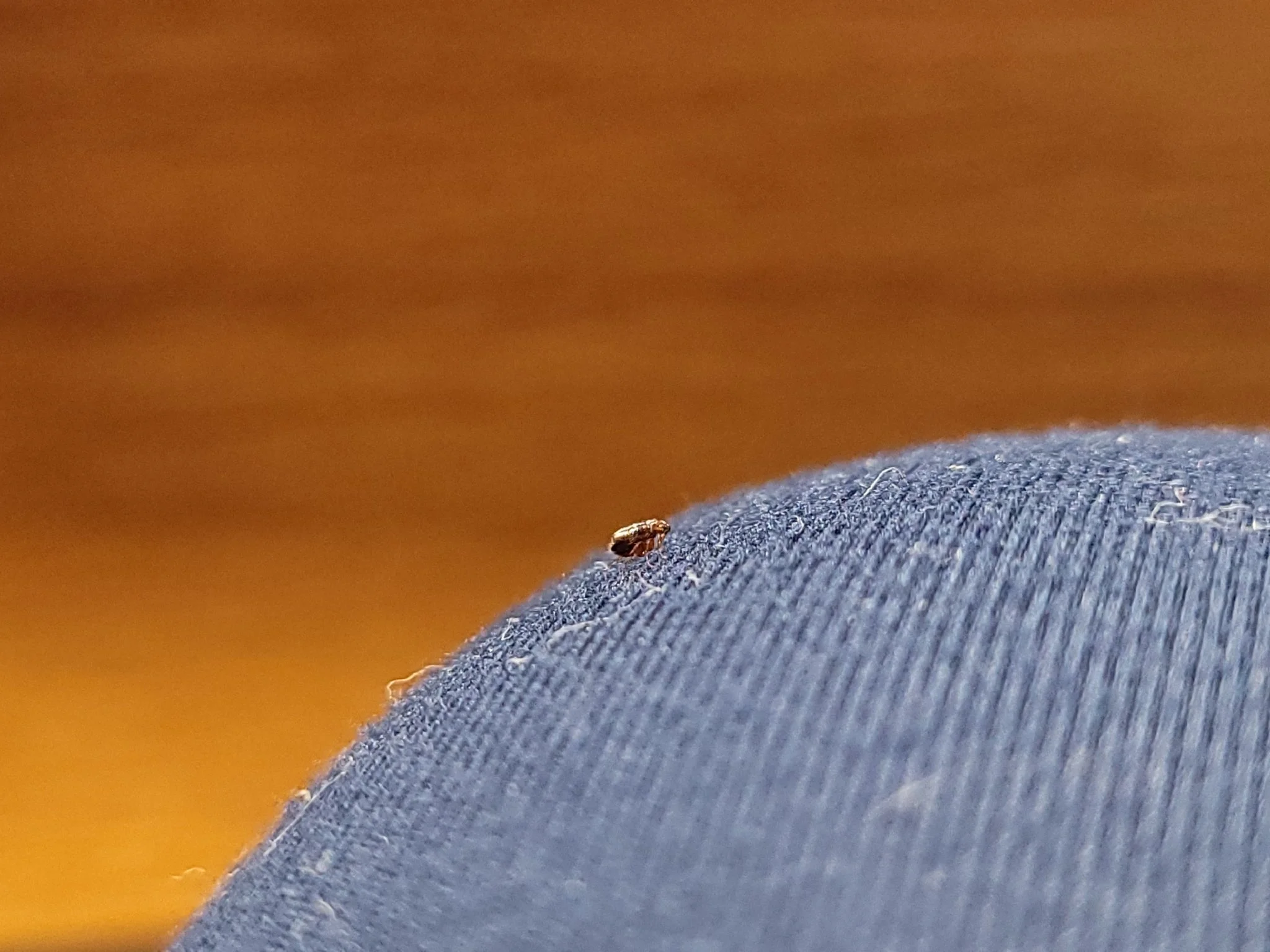
Fleas are tiny, wingless, blood-feeding parasites that target mammals and birds. They possess laterally flattened bodies designed to slip through fur, and they use powerful, spring-loaded back legs to leap massive distances onto their hosts.
Risks and Prevention
Health Hazards: Fleas are vectors for dangerous pathogens, capable of transmitting tapeworms and flea-borne typhus to humans. Their bites cause sharp discomfort and intensely itchy red bumps, while heavy infestations can cause skin allergies and anemia in pets.
Home Impact: They cause zero structural damage but quickly ruin home comfort. Their microscopic eggs and light-avoiding larvae drop off hosts to breed deep inside carpet fibers, rugs, and soft furniture.
Prevention: Keep pets on a strict, year-round vet-approved flea preventative. Regularly wash pet bedding in hot water and vacuum carpets thoroughly to break the insect's lifecycle.
Treatment: Because flea pupae are protected inside resilient, camouflaged cocoons, severe infestations resist standard retail sprays. A professional pest controller is recommended to safely target hidden harborages and disrupt larval growth.
Fleas: Biology, Lifecycle, and Ecological
Impact
Environmental Role and Health Risks
Fleas are widespread parasites that interact closely with wildlife, domestic pets, and humans.
Ecological Purpose: In natural settings, fleas serve as a food source for diverse predators, including birds, reptiles, and mammals, while also helping regulate wildlife populations.
Disease Vectors: Fleas pose severe health hazards due to their ability to transfer pathogens. Historically, they were responsible for transmitting the Bubonic Plague, and they remain key vectors for spreading flea-borne typhus via species like the cat flea (Ctenocephalides felis) and the Oriental rat flea (Xenopsylla cheopsis).
Physical Traits and Anatomical Adaptations
Every aspect of a flea's anatomy is fine-tuned to sustain its blood-feeding, parasitic existence:
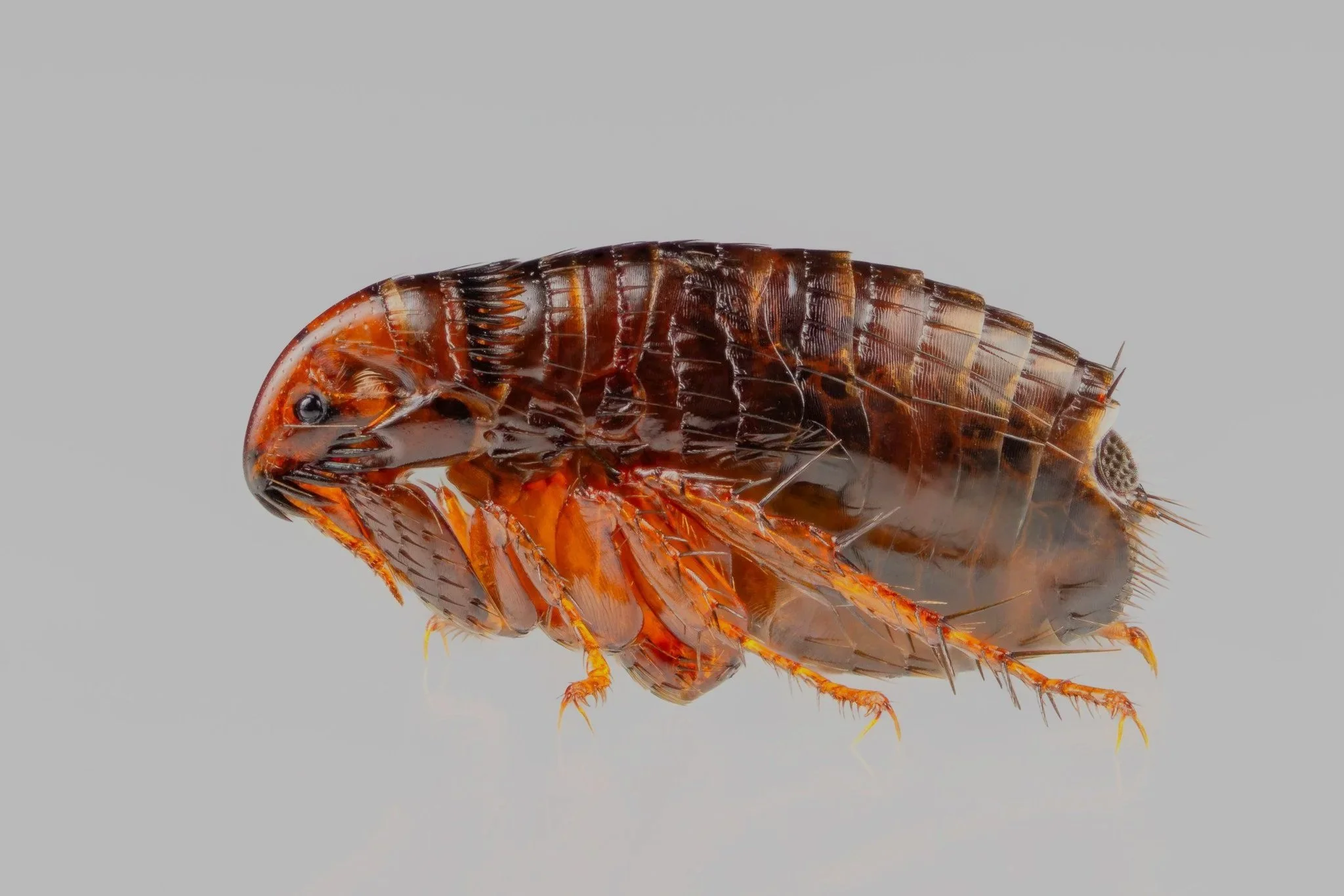
Size and Shape: Typically measuring between 1.5 to 4.0 mm, they possess a unique, laterally flattened body structure. This narrow shape helps them sprint through fur or feathers undetected while making them incredibly difficult for a host to grab or dislodge.
Winglessness: Because clinging to a host and maintaining agility on the ground are paramount, fleas are entirely wingless throughout their lives.
Mouthparts and Feeding: Equipped with elongated, specialized mouthparts, adult fleas easily pierce skin to locate blood vessels. They are voracious eaters, capable of consuming up to 15 times their body weight in blood every day.
Sensory Guidance: Fleas hunt by sensing heat signatures, vibrations, and carbon dioxide emissions from nearby hosts.
Spring-Powered Jumps: Lacking wings, they bridge gaps using elongated back legs. Instead of relying purely on muscle contraction, they utilize a specialized, spring-like elastic structure in their skeleton to store and rapidly discharge the energy needed to leap onto hosts.
The Four Lifecycle Stages
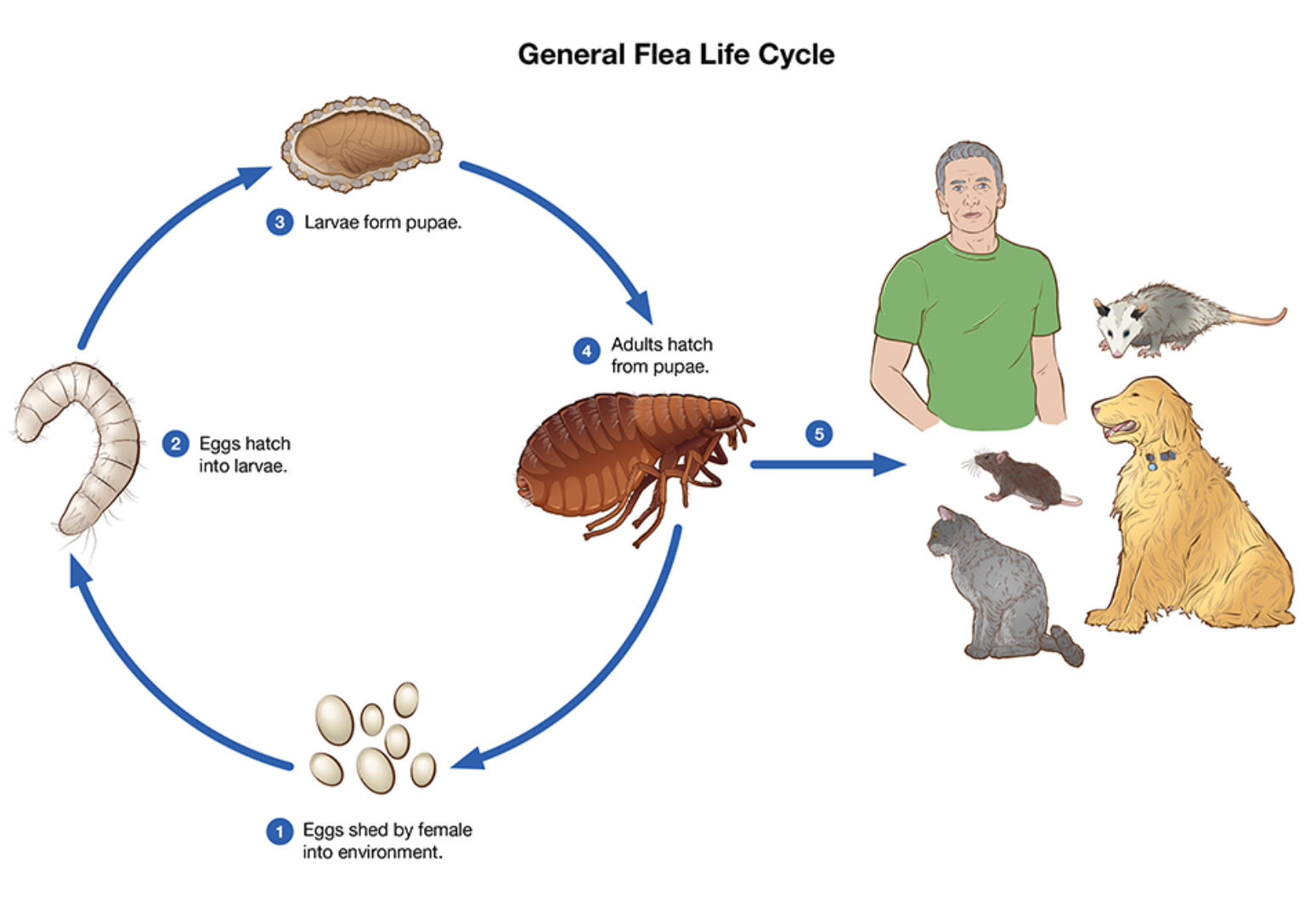
A flea's complete metamorphosis transitions through four distinct phases:
The Egg: Tiny, pale, oval eggs are laid directly on the host but frequently slide off into carpets, bedding, or floor gaps. They hatch in 2 to 14 days depending on ambient warmth and humidity.
The Larva: Legless and resembling tiny worms, larvae aggressively avoid light. They burrow deep into flooring or fabrics, sustaining themselves on organic debris and digested blood found in adult flea droppings. This phase lasts between 5 and 20 days.
The Pupa: Mature larvae spin silken cocoons to pupate. These cocoons accumulate dust and debris, forming an effective camouflage. Fleas can remain dormant inside the cocoon for months during unfavorable weather. Their final emergence is triggered by signs of a host, such as body heat, nearby footsteps (vibrations), or exhaled carbon dioxide.
The Adult: Once emerged, adult fleas immediately seek a blood meal to trigger reproduction. Females can lay up to 50 eggs a day, continuing the generation loop.
While the entire journey from egg to adult takes just 2 to 3 weeks under ideal circumstances, cool or dry conditions can delay development for several months.
Habits and Hiding Spots
Knowing where fleas live and how they operate is crucial for breaking their lifecycle:
Indoor Hotspots: Inside buildings, fleas cluster around pet bedding, deep rug fibers, soft furniture, and cracks in floorboards. Larvae specifically thrive in dark, humid microclimates rich in organic material.
Outdoor Hotspots: Outside, they gather in shaded, damp zones of the yard, under patios, inside dog houses, or anywhere pets regularly play and rest.
Host Coexistence: Adult fleas spend almost their entire mature lives living directly on their host animal.
Extreme Resilience: Fleas are highly adaptable and capable of surviving for multiple months without a blood meal, especially while protected within the pupal cocoon.
Successful management requires a combined approach: treating infested pets, maintaining rigorous environmental cleaning (such as vacuuming and washing bedding), and adjusting humidity levels to disrupt their preferred habitats.